
10 Things to Know Before Visiting Banff in Winter


Travelling to Banff in winter is a magical experience. Snow-covered peaks, hot chocolate next to the fire, and skiing above the famous Lake Louise? I’m not sure what else you could ask for!
While you may be worried about your winter packing list, there are a lot more things you should know about travelling to Banff during the winter months.
Is Banff Worth Visiting in Winter?

Absolutely, Banff is worth visiting in the winter! If you like to ski, you are guaranteed some great skiing at the Banff ski resorts. If you want that classic snowy Hallmark movie Christmas, you are also 99.9% guaranteed a white Christmas in Banff or Canmore.
Restaurants, cafes, boutique shops, and most park attractions are open in winter. The only thing is that it is cold, so you have to be prepared with proper winter clothing. Also, popular summer attractions like Moraine Lake and the Maligne Lake Cruise in Jasper are no longer accessible.
Do You Need a Parks Pass to Visit in the Winter?

Yes! You always need a Parks Canada Pass to recreate in Banff National Park. See the information below for prices, and read our full guide to the national park pass for further questions.
Parks Canada Discovery Pass Fees (Yearly Pass)
| Pass Type (Yearly Pass) | Rate |
|---|---|
| Adult | $83.50 |
| Senior | $71.50 |
| Youth (up to 17) | Free |
| Family/Group (up to 7 Persons) | $167.50 |
Parks Canada Day Pass Rates
| Pass Type | Rate |
|---|---|
| Adult | $12.25 |
| Senior | $10.75 |
| Youth (up to 17) | Free |
| Family/Group (7 Persons) | $24.50 |
What is the Coldest Month in Banff?

It’s going to be cold if you visit in the winter. Statistics say that December is the coldest month in Banff, but the coldest snaps have always come in late January and February in our years living here; every year is completely different.
What do I mean by cold snaps? I’m talking -25°C days sometimes. When the cold snaps come, they typically last for a week or so, and then they will mellow back down to a mild -20°C or -15°C. Can you tell I’m being sarcastic?
Cold snap or not, you need to be prepared for cold weather if you visit anytime between November and April. This means parkas, boots, wool socks, thermals, hats, gloves, scarves – the whole winter sha-bang.
Must Have Winter Items

Here is a short rundown of what to pack in Banff in winter.
- Winter Parka/coat
- Down Jacket
- Sweaters/Fleece
- Flannel
- Casual Pants/jeans
- Fleece-lined leggings
- 1 x Top Base Layer
- 1 x Bottom Base Layer
- 2-3 x Wool Underwear
- 2-3 x Wool Socks
- 1 x Mid-Layer Jacket
- 1 x Insulated Jacket
- 1 x Snow Pants (if planning on playing in snow)
- 1 x Mitts or Gloves
- 1 x Balaclava/scarf
- 1 x Toque
- 1 x pair of winter boots
Can You Hike in the Winter?
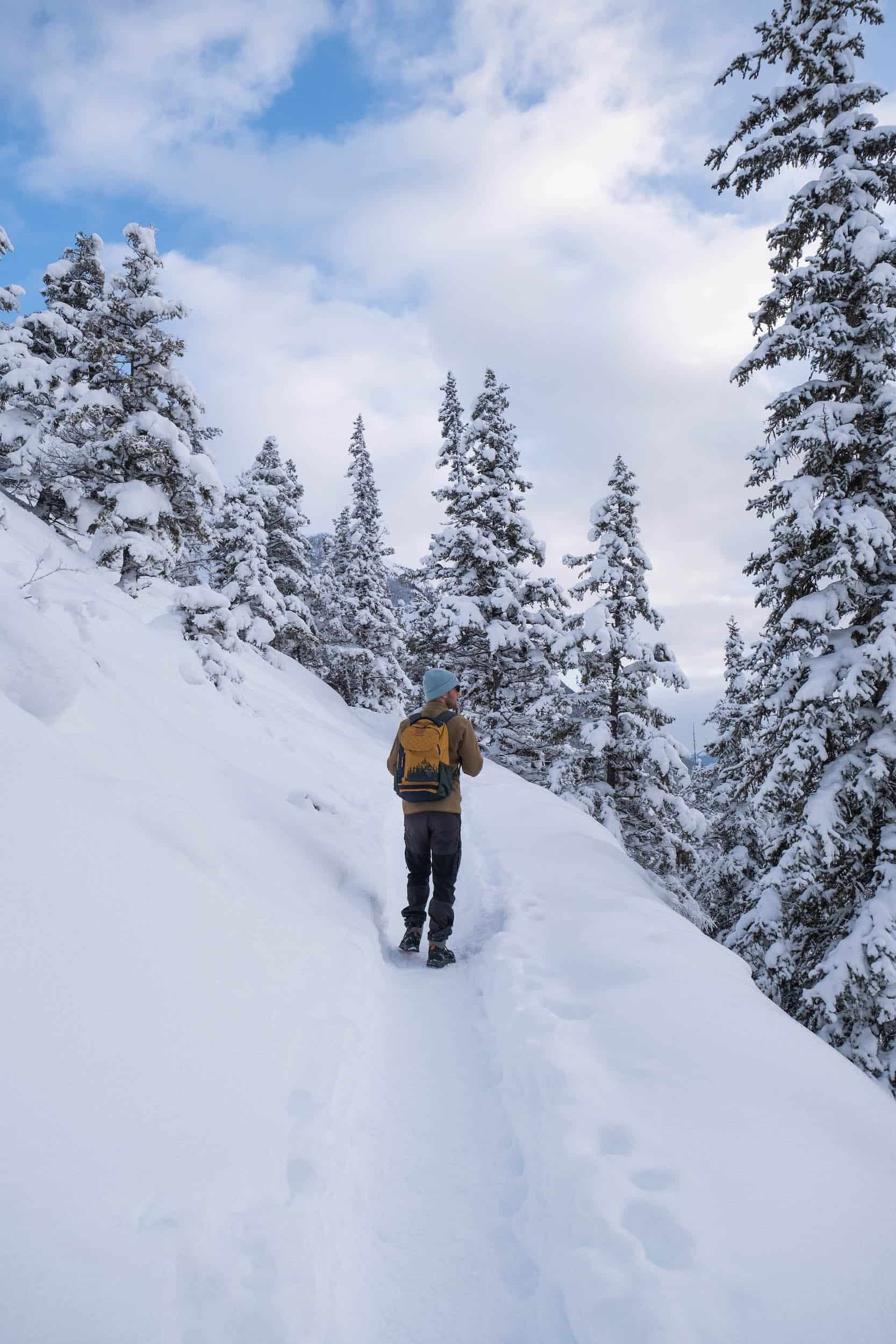
You can hike in the Canadian Rockies in winter, and it is fabulous. My favorite winter trails are Tunnel Mountain, Sulphur Mountain, Johnson Lake, the Hoodoos Viewpoint, and Grassi Lakes in Canmore. You’ll want waterproof hiking boots for winter hiking, and possibly gaiters and microspikes. A hiking pole is never a bad idea if you plan to do lots of hiking in the winter either.
Although there are some great winter hikes, two other popular winter options are snowshoeing and Nordic skiing. It’s crucial to stay aware of your surroundings while hiking in the winter, as many popular summer trails become avalanche terrain during this season, and you don’t want to get caught hiking near it. Always be mindful of where you are hiking!
Is Banff Closed in the Winter?

Banff is absolutely not closed in the winter. This is a national park, and Parks Canada keeps everything open. The main thing this does not pertain to is Moraine Lake. Moraine Lake is essentially closed in the winter, but really what is closed is the access road to Moraine Lake, which Parks Canada closes in October due to avalanche risk. Moraine Lake Road is only open from June 1st to mid-October.
However, no one stops people from going to Moraine Lake, and adventurers can snowshoe, ski, or fat bike back if they wish. However, they assume all the risks involved in doing so, and it is not recommended for the average visitor.
This goes for most of the park. Very few natural attractions are “closed,” but visitors need to use common sense to determine if their actions are safe in snowy conditions. This typically means having mountain experience, avalanche training, and gear if they plan to go into the backcountry. Deaths and avalanches have occurred involving unsuspecting tourists in areas they are not familiar with.
However, when asked whether Banff is closed in the winter, readers often think of tourist attractions like the Banff Gondola, Upper Hot Springs, the Cave & Basin Museum, and shops on Banff Avenue. And the answer is no – not many of your typical activities in Banff are closed in the winter. Banff is a year-round destination, though hiking options are much more limited.
Popular attractions that are closed in the winter in the Canadian Rockies are the Jasper Skywalk, Glacier Explorer, Icefields Discovery Center and essentially any man-made attraction along the Icefields Parkway. The Lake Louise Summer Gondola, Mount Norquay Summer Chairlift, Sunshine Summer Gondola, and the Golden Skybridge are all closed until summer as well.
Can You Visit Moraine Lake in the Winter?

As mentioned, Moraine Lake Rd is closed from Canadian Thanksgiving (the second week in October) until early June. The only way to visit Moraine Lake in the winter is to snowshoe, fat bike, or cross-country ski in.
However, only experienced winter adventurers with avalanche training and knowledge should venture past the Consolation Valley lookout point on Moraine Lake Road, as this is serious avalanche territory. So to answer the question, the average visitor cannot visit Moraine Lake in the winter.
Can You Get to Lake Louise in the Winter?

Yes! Lake Louise is open all year round, unlike Moraine Lake. While parking is usually a huge struggle in the summer months, the public parking at Lake Louise in the winter rarely fills up, and it is free to park. We’ve visited Lake Louise dozens of times in the winter and have never had a problem parking.
That doesn’t mean you won’t have some difficulty on weekends around Christmas or New Year’s, though; you should still be able to nab a spot.
Driving in Banff in Winter

Anyone visiting Banff between November and April needs to be prepared for winter road conditions. This is especially true when driving the Trans-Canada, the Bow Valley Parkway, and the Icefields Parkway.

Alberta roads can become treacherous in the winter, and at the very least, you need to have winter tires on your car. If you rent a car for your trip to Banff, ensure that the vehicle is equipped with winter tires or at least all-season tires. Rental agencies don’t automatically provide them just because it is February in Alberta. If you plan on driving the Icefields Parkway in winter or into British Columbia in the winter, it is mandatory to have winter tires on your vehicle.
Experience driving in snow is a huge plus. Snowstorms and blizzards are common during this time, so it’s essential to pay attention to the weather and stay off the road if there are snowfall warnings. You can check 5.11 Alberta for road conditions.
Things to do in Banff in Winter

Just because it’s below zero doesn’t mean there aren’t plenty of things to do in Banff in winter. Here are some of our favorite activities.
- Banff Gondola: Open all winter long, this is a great family-friendly activity. Get high above the town of Banff and enjoy the amazing winter skies while looking out to Cascade Mountain. Dress warmly – it gets cold up there!
- Ice Skate on Lake Louise: The Fairmont maintains an ice rink on the beautiful Lake Louise every winter. From mid-December to mid-April, you can skate in one of the most beautiful settings in the world!
- Dog Sledding: If you really want to try something different, book a dog sled tour in Kananaskis. There’s no better way to see the mountains!
- Go skiing: Of course, one of the best things to do in Banff in the winter is ski or snowboard at one of the resorts here. Even if you’re a beginner, there is a run for you!
If you don’t have a car, these tours are great for exploring
Driving in Alberta in the winter can be nerve-wracking for those new to snow. While a rental car will allow you to see more, it’s not 100% necessary. Plenty of tours will pick you up in Downtown Banff and take you sightseeing for a day!
- Discover Lake Louise and Yoho In Winter: Explore the Bow Valley Parkway, Lake Louise, and Emerald Lake!
- Lake Louise Wonderland: Visit Kootenay National Park, hike Marble Canyon, and finish at Lake Louise
- Bow Valley Parkway, Johnston Canyon, and Lake Louise: Radventures runs this winter tour which includes hiking at Johnston Canyon.
- Lake Louise and the Icefields Parkway Full-Day Tour: This famous summer tour also runs in the winter for those wanting to see Lake Louise and drive the Icefields Parkway!
- Lake Louise, Emerald Lake and Peyto Lake: Drive part of the Icefields Parkway and see the famous Emerald Lake in Yoho!

If you’re heading to Western Canada soon, make sure to check out our interactive map with over 450 spots to help you plan!


